 MENU
MENU



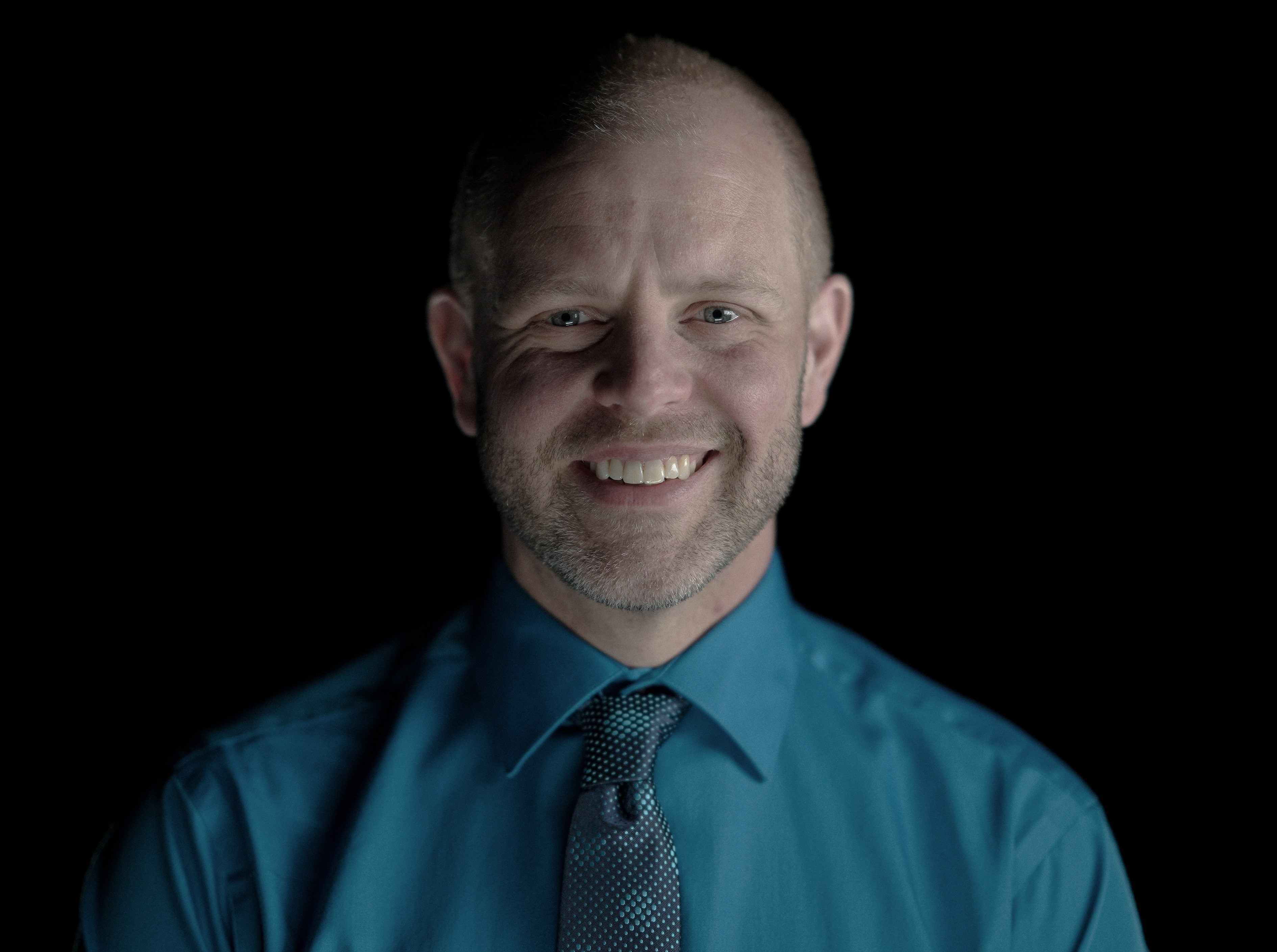
Academic title: Professor of Sociology
Education
PhD, University of Oregon
MA, Tulane University
BA, Ripon College
Email: thaney@mtroyal.ca
Profile
Tim Haney is a Professor of Sociology at MRU, and a faculty affiliate of the Centre for Community Disaster Research. His teaching and research interests include the sociology of disaster, environmental sociology, urban sociology, the sociology of science, and quantitative methods. He founded, and served as Director, of the Centre for Community Disaster Research (CCDR) from 2014 to 2019, and was the inaugural Board of Governors Research Chair in Resilience and Sustainability from 2019 to 2022.
Research Interests
Disaster and crisis response, risk perceptions, post-disaster migration and decision-making, gender inequalities after disaster, fossil fuels and petro-cultures, cities and urban development, permaculture and urban agriculture, public acceptance and/or rejection of science, methods and ethics for disaster research
Dr. Haney's research looks at how families, neighbourhoods, and communities prepare for and respond to catastrophic events like hurricanes, floods, wildfires, and oil spills. His articles have looked at how disaster-affected residents perceive risk and experience uncertainty, how they make evacuation decisions, how disasters affect their environmental views and practices, how the social networks of affected residents change over the course of evacuation and displacement, as well as establishing best-practices for disaster research methods. More recently, Dr. Haney undertook a SSHRC-funded study of practicioners of permaculture in Western Canada, analyzing how they conceive of risk, challenge the logics of capitalism, form networks and social capital, and work to enhance community resilience.
Teaching
Dr. Haney's approach to teaching is participatory, critical, scholarly, reflective, experiential, service-oriented, and geared toward social change. In particular, he relishes opportunities to engage classes in experiential learning and service-learning, and is proud to have taken two classes of students to New Orleans on field schools to learn about disaster recovery while serving the community. He also supervises many student honours theses, coauthors scholarly articles with MRU students, and involves students in his funded research projects to facilitate hands-on learning.
During the COVID-19 pandemic, Dr. Haney developed what he calls a “pedagogy of kindness,” showing students extreme flexibility and understanding and working to create a non-hierarchical learning community. Though his teaching covers serious topics, like disaster, he paired his classes with costumes, zoom backgrounds, Snap filters, and whimsical humour. This approach to teaching resulted in his selection as the 2022 “Outstanding Teacher” in the MRU Faculty of Arts.
Selected Publications
Haney, Timothy J. and Aulora Morrow. (Forthcoming). “‘We’re Still on that Treadmill’: Class Privilege, Reflexivity, and the Disruptive Potential of Permaculture.” Capitalism Nature Socialism.
Haney, Timothy J. and Kristen Barber. 2022. “The Extreme Gendering of COVID-19: Household Tasks and Division of Labor Satisfaction During the Pandemic.” Canadian Review of Sociology 59(s1): 26-47.
Haney, Timothy J. (2022). “Development, Responsibility, and the Creation of Urban Hazard Risk.” City and Community 22(1): 21-41.
Haney, Timothy J. (2022). “’Scientists Don’t Care about Truth Anymore’: The Climate Crisis and Rejection of Science in Canada’s Oil Country.” Environmental Sociology 8(1): 7-24.
McDonald-Harker, Caroline, Emilie Michelle Bassi, and Timothy J. Haney. (2022). “'We Need to Do Something About This’: Children’s Post-Disaster Views on Climate Change and Environmental Crisis.” Sociological Inquiry 92(1): 5-33.
Haney, Timothy J. (2021). “Disrupting the Complacency: Disaster Experience and Emergent Environmentalism.” Socius: Sociological Research for a Dynamic World 7: 1-17.
Haney, Timothy J. and Daran Gray-Scholz (2020). "Flooding and the New Normal: What is the Role of Gender in Experiences of Post-Disaster Ontological Security." Disasters 44(2): 262-284.
Haney, Timothy J. (2019). "Move Out or Dig In? Risk Awareness and Mobility Plans in Disaster-Affected Communities." Journal of Contingencies and Crisis Management 27(3): 224-236.
Haney, Timothy J (2018). “Paradise Found? The Emergence of Social Capital, Place Attachment, and Civic Engagement After Disaster.” International Journal of Mass Emergencies and Disasters 36(2): 97-119.
Haney, Timothy J. and Caroline McDonald-Harker (2017). "'The River Is Not the Same Anymore': Environmental Risk and Uncertainty in the Aftermath of the High River, Alberta Flood." Social Currents 4(6): 594-612.
Milnes, Travis and Timothy J. Haney (2017). "'There's Always Winners and Losers': Traditional Masculinity, Resource Dependence, and Post-Disaster Environmental Complacency." Environmental Sociology 3(3): 260-273.
Grants, Honours, and Awards
- MRU Distinguished Faculty Award, 2023
- Outstanding Teacher Award, Faculty of Arts, Mount Royal University, 2022
- "The Ethics, Practice, Activism, and Resilience Potential of Permaculture." Insight Development Grant Program, Social Sciences and Humanities Research Council (SSHRC) of Canada, 2020-2022 ($59,240).
- Outstanding Scholar Award, Faculty of Arts, Mount Royal University, 2016
- "Evacuation Decisions, Displacement, and Network Activation During the 2013 Calgary Flood." Insight Grant Program, Social Sciences and Humanities Research Council (SSHRC) of Canada, 2014-2018. ($102, 774)
- “The Effects of Environmental Disasters on the Family: Communicating, Coping, and Caring Among Families Impacted by the 2013 High River, Alberta Floods." (with Co-PI Caroline McDonald-Harker). Partnership Development Grant Program, Social Sciences and Humanities Research Council (SSHRC) of Canada, 2014-2017 ($165,339).